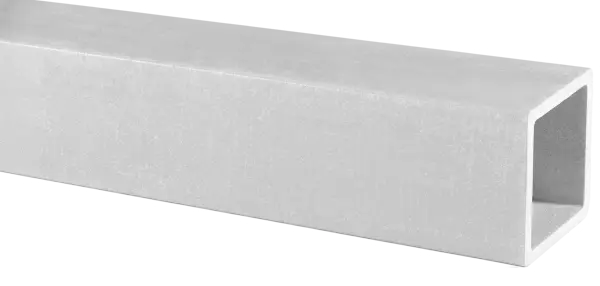
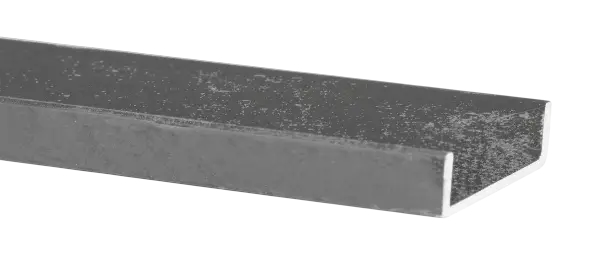
The rectangular fiberglass tube has excellent mechanical and chemical properties. This allows it to be used as a structural profile. Railings, doors or posts are some of its most popular applications.

At Polymec, we offer fiberglass rectangular tubes for technical applications where a structural profile with rectangular geometry, mechanical properties and chemical properties is required.
We use this type of profile when we need a component with a closed section, flat faces and different width-to-height proportions. This geometry allows it to be integrated into structures, supports, frames, enclosures or systems where a rectangular format is more suitable than a square or round tube.
According to the current product sheet, some of its most common applications are railings, doors and posts, as well as other uses as a structural profile.
A fiberglass rectangular tube is a hollow profile with a rectangular section. Unlike a square tube, its sides are not the same length, allowing it to adapt to designs where a larger dimension is required on one axis and a smaller dimension on the other.
Within our range of fiberglass profiles, we recommend this format when the project geometry requires a closed, stable section that is easy to combine with other structural elements.
We use fiberglass rectangular tubes as structural profiles in a range of technical applications.
The uses listed in the current product sheet include:
This type of tube is useful when the project design requires a component elongated in one direction, a flat support surface or a rectangular section that facilitates integration with other profiles.
The fiberglass rectangular tube has mechanical and chemical properties, according to the current product sheet.
These properties help us assess the profile in projects where not only the rectangular shape matters, but also the material's performance within the application.
We recommend a fiberglass rectangular tube when a structural profile with a closed section and different proportions between its sides is required.
We also consider it when the project requires a component for railings, doors, posts or other structures where the rectangular shape facilitates assembly, support or integration with other components.
When there are specific requirements regarding load, fastening, operating environment, tolerances or supply, we review the case before confirming the final reference.
If the rectangular tube does not match the geometry required, we also offer other fiberglass profiles that can be considered depending on the application:
Do you need a fiberglass rectangular tube for a railing, door, post or technical structure? At Polymec, we review the most suitable reference with you according to dimensions, weight per metre and project requirements.
The rectangular tube has sides of different lengths, while the square tube has the same dimension on all sides. We choose one or the other according to the available space, the assembly geometry and the function the profile must perform.
It is advisable to indicate the intended application, approximate dimensions, the reference being considered, the operating environment, the type of assembly and any technical requirement that may affect the choice.
Yes. Thickness forms part of the profile dimensions and helps us compare references. To relate it to specific performance characteristics, we first confirm the available technical information.
Yes. We can compare the rectangular tube with a square tube, round tube, U profile, angle profile or flat bar when the project allows for several possible geometries.