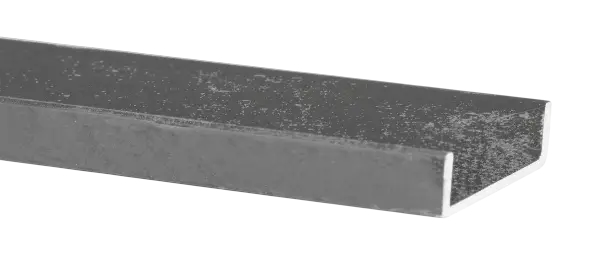
Fiberglass angle profile for joining structural profiles
At Polymec, we offer fiberglass angle profiles for applications where different structural profiles need to be joined or a technical solution needs to be reinforced with an angular component.
We use this profile when an angle geometry is required to facilitate connections between elements, improve structural support and adapt to both small and large structures.
The fiberglass angle profile stands out for its light weight, strength and maintenance-free performance. For these reasons, we recommend it for projects in marine environments, adverse weather conditions, wastewater treatment plants and chemical industries.
What is a fiberglass angle profile?
A fiberglass angle profile is a technical profile with an angular section. Its geometry allows it to be used as a joining, reinforcing or support element in structures made up of different profiles.
Within our range of fiberglass profiles, we use the angle profile when junctions between components need to be resolved, a structural edge needs to be reinforced or the connection between different assembly elements needs to be facilitated.
Applications of the fiberglass angle profile
We use the fiberglass angle profile in structural applications where different profiles need to be joined and the support capacity of the assembly needs to be increased.
The current product sheet highlights its use in:
- Marine environments.
- Adverse weather conditions.
- Wastewater treatment plants.
- Chemical industries.
- Large structures.
- Small structures.
This type of profile is useful when an angular component is required to form part of the joining, reinforcement or construction of a technical structure.
Technical advantages of the fiberglass angle profile
The fiberglass angle profile offers several advantages listed in the current product sheet:
- Lightweight.
- Strength.
- Low weight.
- No maintenance.
These characteristics help us assess this profile in projects where we need a structural solution that is easy to handle, resistant and low-maintenance in use.
When do we recommend a fiberglass angle profile?
We recommend a fiberglass angle profile when an angular component is required to join structural profiles or reinforce a specific area of the assembly.
We also consider it when the project is carried out in demanding environments such as marine areas, wastewater treatment plants, chemical industries or locations with adverse weather conditions.
When there are specific requirements regarding load, fastening, exposure, tolerances, dimensions or supply, we review the case before confirming the final reference.
Related fiberglass profiles
If the angle profile does not match the geometry required, we also offer other fiberglass profiles that can be considered depending on the application:
- Fiberglass corner profile.
- Fiberglass U profile.
- Fiberglass Z profile.
- Fiberglass flat bar.
- Fiberglass square tube.
- Fiberglass rectangular tube.
- Fiberglass round tube.
- Fiberglass round rod.
- Fiberglass square rod.
- Fiberglass half-round profile.
Request information about the fiberglass angle profile
Do you need a fiberglass angle profile to join structural profiles, reinforce a structure or work in a demanding environment? At Polymec, we review the most suitable reference with you according to dimensions, weight per metre and project requirements.
Frequently asked questions
What information do we need to recommend an angle profile reference?
We need to know the application, approximate dimensions, type of joint, position of the profile in the structure, operating environment and any assembly requirements.
How does thickness affect the choice of angle profile?
Thickness forms part of the profile dimensions and helps us compare references. To associate it with specific performance characteristics, we first confirm the available technical data.
When do we compare an angle profile with a fiberglass corner profile?
We compare both profiles when the project requires reinforcing an edge, resolving a corner or protecting a contact area. We choose the geometry according to the exact function within the assembly.
What should we review if the angle profile is used in a wastewater treatment plant or chemical industry?
We review the exposure conditions, the type of contact with chemical agents and the applicable properties before recommending a reference or communicating specific performance characteristics.
Does weight per metre affect assembly?
Yes. Weight per metre helps us assess handling, transport, integration into the structure and the choice between the different available references.